
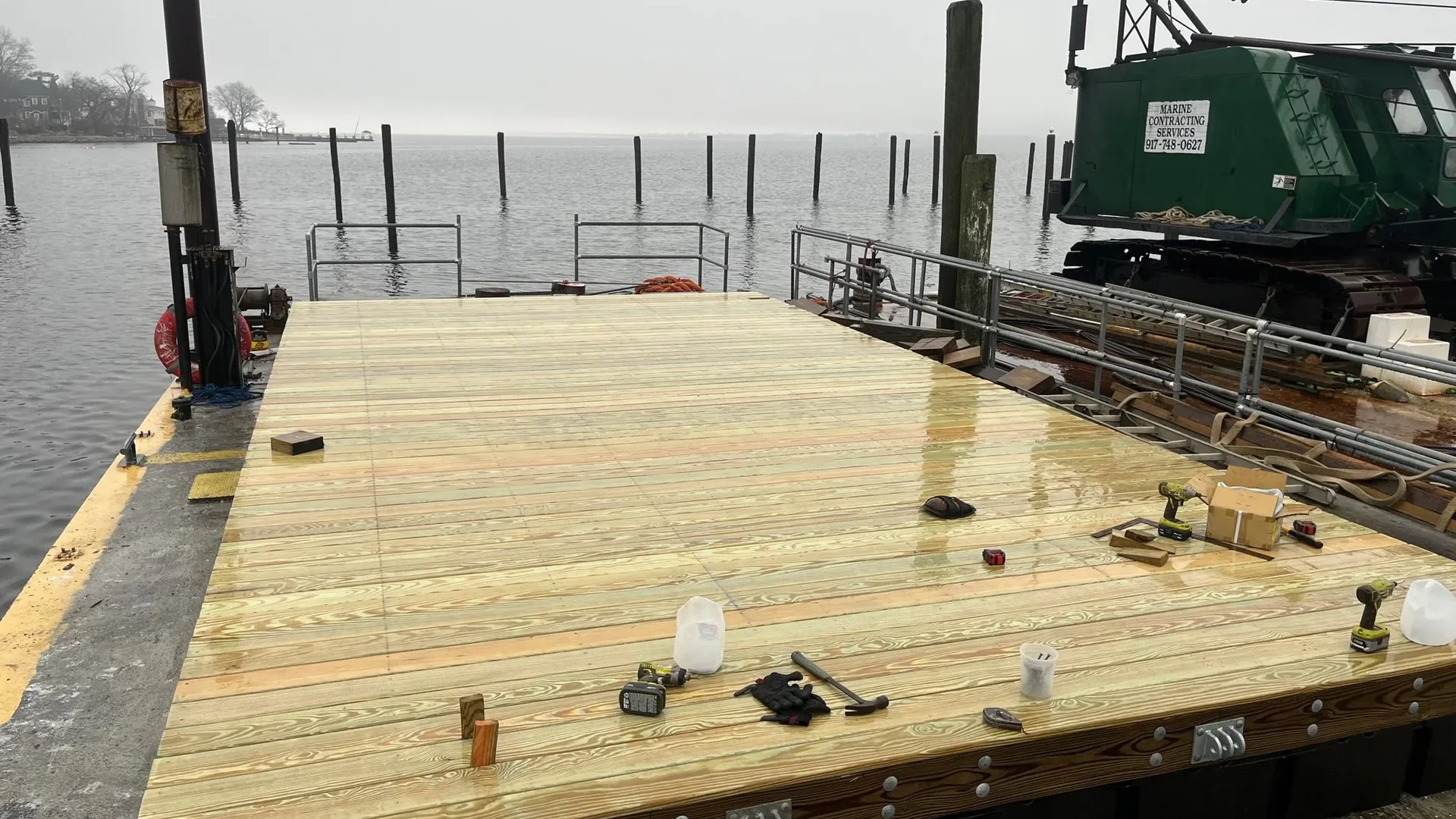
10 Oct Custom Floating Docks in New York: What to Consider Before You Build
A custom floating dock should begin with a practical question: how will people use it? A residential boarding platform, a marina walkway, and a working waterfront platform may look similar in a photograph, yet serve very different purposes. Starting with the intended use gives the planning conversation direction and helps you avoid choosing a layout simply because it looks appealing elsewhere.
All Pro Marine Contracting Corp. offers custom built floats from its City Island base. For waterfront owners across Greater New York City, Lower Westchester, and Northern Nassau County, discussing the location and intended operation is the first step toward understanding whether a proposed float arrangement fits the property.
Define the activities the float must support
List the activities you expect to take place on the platform. Boarding a boat, carrying supplies, handling lines, and accommodating several users at once create different planning questions. Explain whether the float will serve private owners, marina customers, staff, or another group. The designer and contractor need that context before discussing specific dimensions.
Consider the busiest situation. Describe the equipment that may be present and where people need room to move. These observations are inputs for professional design and evaluation; they are not a substitute for determining suitable capacity. Avoid assuming that a platform suitable for one activity will automatically accommodate another.
Explain the relationship between shore and water
The transition from land to the floating platform deserves as much attention as the platform itself. Describe the current access route, any existing gangway, and the locations where movement feels awkward. Share photographs from safe, accessible positions so the project team can see the overall arrangement.
Discuss how changing water levels affect your experience at the site. Rather than requesting a generic gangway solution, explain the situations you want improved. Ask what measurements and site information are needed to evaluate the connection. The objective is a coordinated system whose components are considered together, including the route people use to reach the float.
Match the layout to the boats
Provide information about the vessels expected to use the area. Boat dimensions, boarding locations, and the way owners approach their slips can influence the planning discussion. If you anticipate a different vessel in the future, mention it early rather than assuming the same arrangement will remain convenient.
For a shared facility, identify whether different boats use the platform at different times. Ask how the proposed layout relates to neighboring slips and maneuvering space. A custom float should be evaluated within its surroundings. Looking only at the platform dimensions can miss practical conflicts with the broader waterfront arrangement.
Discuss materials as part of the whole system
Decking is often the first material owners notice, but it should not be the only material discussed. Ask about framing, flotation components, connections, and the reasoning behind the proposed combination. Each selection belongs to a larger design and should be explained in relation to the intended use.
Request information about care requirements and product limitations. Appearance, maintenance preferences, and anticipated use all deserve consideration. Avoid treating a product description as a guarantee that the complete installation will perform a certain way. Ask which specifications apply to the proposed project and what documentation will be available when the work is finished.
Ask about the attachment arrangement
A floating platform also requires an appropriate means of staying in its intended position. During planning, ask how that part of the project will be evaluated and what existing components may be involved. Do not assume an attachment arrangement from another property can simply be copied.
Share any concerns about movement that you have observed, but leave technical conclusions to qualified professionals. The useful question is not which single component appears strongest in isolation. It is whether the complete proposed arrangement has been assessed for the site, intended operation, and relevant project requirements.
Include maintenance in the buying decision
Discuss ongoing care before choosing a final design. Ask what the owner should monitor, which components may require periodic attention, and whom to contact if the platform’s condition changes. Request any applicable manufacturer information and recommendations for professional inspections.
Consider how maintenance access will work. A detail that looks tidy in a drawing may still deserve questions about future service. Planning for ownership helps you evaluate the proposal as a long term facility decision rather than a single construction purchase.
Clarify delivery and installation responsibilities
Custom work involves more than fabrication. Ask how the float will reach the property, how installation will be coordinated, and what access must be available. Discuss whether existing equipment or structures need to be moved and who will handle those arrangements.
Request a clear description of what the price includes. Fabrication, transport, installation, related access work, and removal of an existing float may be separate items. Written clarification makes comparison easier and helps prevent an attractive initial figure from being mistaken for the cost of the complete project.
Organize the project before requesting a proposal
Prepare a short project brief with the location, intended users, vessel information, photographs, and preferred timing. Include your main frustrations with the existing setup. If you already have drawings or earlier project documents, make them available and explain whether they reflect current conditions.
List the decisions that remain open. You might need help evaluating the layout, selecting a practical surface, or understanding what site review is necessary. Describing these questions is more useful than presenting an assumed solution as a requirement before the property has been evaluated.
Talk with All Pro Marine about custom floats
A successful custom float starts with a thoughtful conversation about use, access, and the surrounding waterfront. The goal is to create a clear project scope that reflects the property and gives everyone a shared understanding of what is being proposed.
Visit All Pro Marine’s custom built floats page to explore this service, then contact the City Island team to discuss your project. Call (718) 885-0429 or submit the website’s contact form with your location and a brief description of the float you need.
Sorry, the comment form is closed at this time.